


Caliq began with a small, stubborn frustration - calendars are powerful, but people do not think in perfectly formatted calendar fields. We think in rough notes, half-made plans, screenshots, links, and sentences that only become clear once they are placed on a day.
The earliest version of Caliq was built around that gap. The goal was not to make another calendar with a nicer form. It was to make the distance between intention and schedule feel shorter, more private, and more human.
The first promise was simple
From the beginning, Caliq’s personality was practical - natural language first, no ads, no tracking, no unnecessary account layer, and a quiet respect for the way Apple users already move between devices.
That promise has stayed in place even as the app grew. What changed over the first public season was the size of the product around it. Caliq moved from a clever way to capture events into a fuller planning companion with calendar filtering, notes, widgets, weather, Mac support, iCloud backups, Apple Maps previews, and more reliable everyday flows.
A release history shaped by real use
The timeline below is less a list of version numbers than a map of what Caliq learned from people using it. Each release tightened the original idea - make calendars understand life as people actually describe it.
The idea takes shape
Caliq started as a technical seed named Noder, then quickly turned toward a clearer product idea. A calendar should understand the way people naturally describe their days, from rough notes to incomplete thoughts to everyday language.
Versions 1.0 to 1.5
Caliq reaches the App Store
The first public release introduced Caliq as a natural calendar for Apple users. The first updates quickly sharpened the roadmap with active calendar filtering, stronger notes, recurring item controls, smart filtering, and early user questions about offline parsing, language support, pricing, and Mac.
Versions 2.0 and 2.5
The calendar becomes a planning system
Richer repeat handling, conflict awareness, free-time summaries, refined event cards, notification badges, and calendar activity widgets made Caliq more visible throughout the day. The public conversation also became more useful, with people asking for clearer plans, broader availability, better trials, and more calendar control.
Version 3.0
A new identity arrives
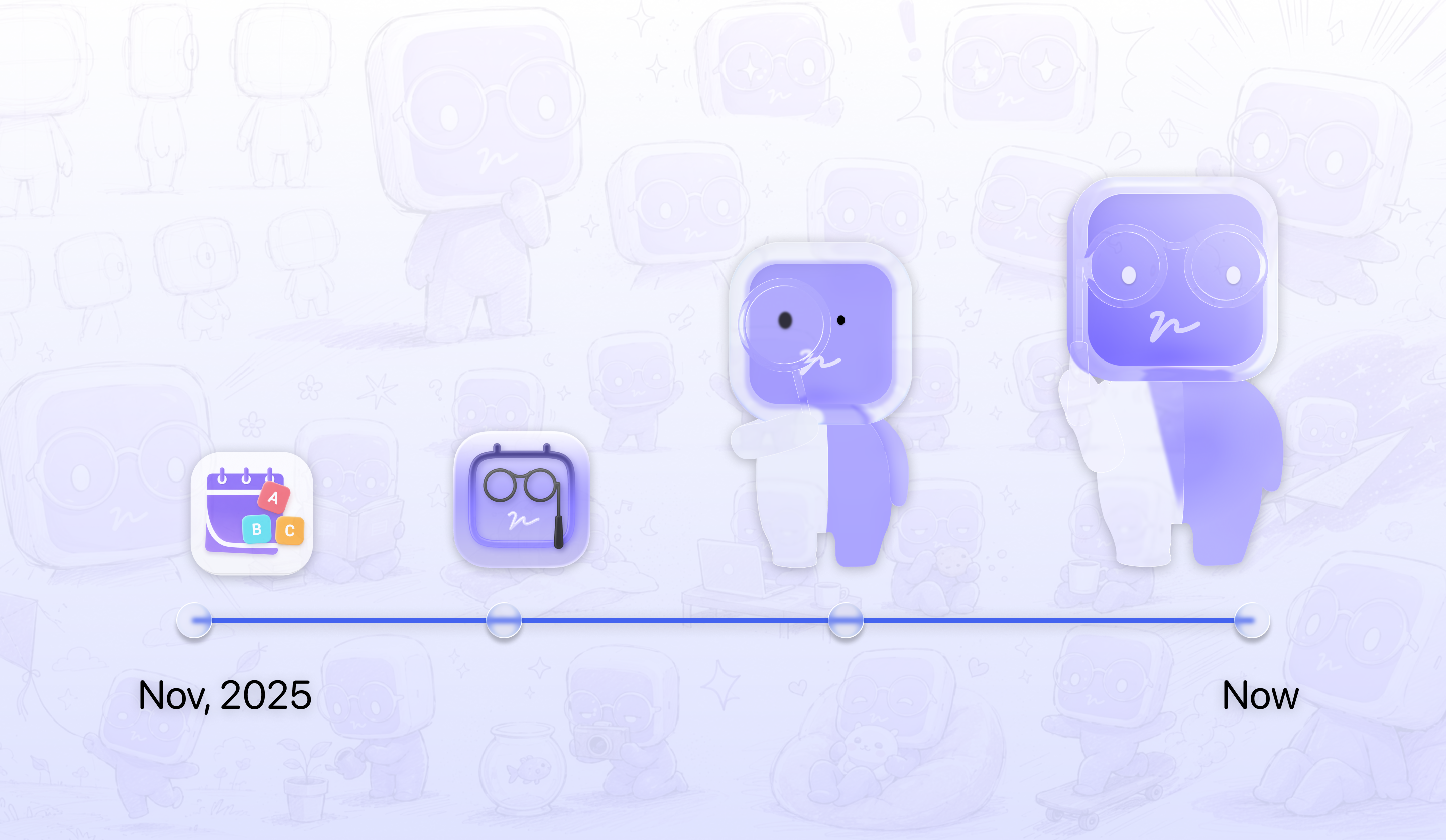
Version 3.0 brought a new logo, a redesigned calendar experience, weather integration, performance improvements, and a clearer website for the brand. Newscorner also launched in March, giving Caliq a place to explain its layered intelligence without pretending natural language was magic.
Version 3.5
Caliq comes to Mac
The first Mac release turned Caliq into a planning companion across iPhone, iPad, and Mac. Guided onboarding, iCloud backups, customizable widgets, Apple Maps previews, richer weather context, redesigned event details, and reliability work made the release feel broader than a platform expansion.
Version 3.6
The first chapter consolidates
Version 3.6 focused on steadiness across calendar filters, notes, weather, onboarding, Pro flows, menu bar behavior, location prompts, widgets, and general stability. By May, the public pitch was also clearer and the response was warmer, with people testing Caliq against more serious real-life planning.
What changed underneath the release notes
The public story changed as the product changed. Early on, the question was whether a calendar could understand messy input well enough to be useful. By spring, the conversation was more specific - complex recurring events, multi-event prompts, widgets, summaries, weather-aware planning, Mac behavior, and how far the natural-language engine could go.
That shift mattered. It meant people were no longer only reacting to the idea. They were testing Caliq against real routines, real calendars, and real expectations. The product became community-shaped in the best sense - still opinionated, still personal, but sharpened by the questions users asked once they started depending on it.
The thread that stayed constant
Across the first public season, from November 2025 into May 2026, Caliq became bigger without losing its center. It started as a way to make calendar entry less rigid, then grew into a product about trust, privacy, cross-device planning, quick capture, visible context, and a brand voice that felt personal rather than corporate.
The emotional arc is simple - Caliq began as a way to turn messy life into structured time. It is becoming a small companion for seeing the day more clearly, and for acting on it without having to translate yourself into boxes first.